- Home
- Getting Started
- Beginner Basics
- How Hard is Pole Dancing?
Can You Learn Pole Dancing If You're Not Fit Yet?
By Susan Peach
Pole dancing requires physical strength, flexibility, and endurance, as well as mental focus and confidence. But you don't need any of these to get started, because you'll work on them as you learn. In this article we'll look at how fit you actually need to be to get started, how to safely build a strong foundation, the importance of proper technique, and how to win at the mental game. If you're thinking of starting pole dancing but you're worried about how hard it might be, this article is for you.
Am I Fit Enough?
Your Pole Pal is going to be honest with you: pole dancing is hard. It requires physical strength, endurance and flexibility, and it challenges both the body and the mind.
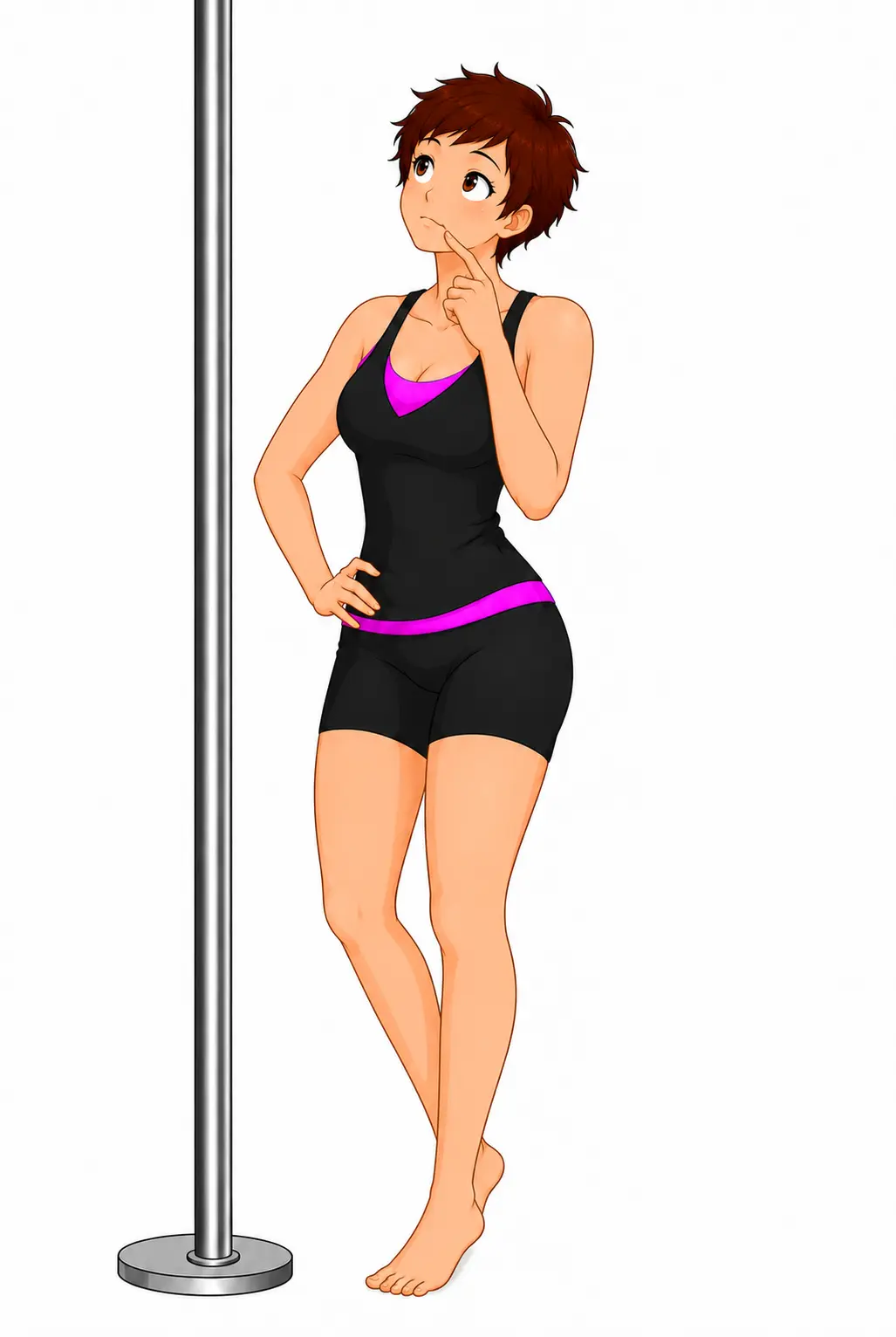
In fact, when people ask how hard pole dancing is, the question that's hiding underneath is usually some version of "am I fit enough?"
And the answer to that question is a resounding YES. Even if you feel out of shape, even if you're overweight, and even if you've never worked out in your life.
Here's the thing: everyone starts from a different place, bringing different fitness levels, experience, motivation and goals with them.
Your journey will almost certainly start from a different place than someone else's. It may take you longer to get airborne, build enough strength to climb the pole, or master a particular trick.
But you are absolutely fit enough to begin.
And here's a little secret...pole dancing is always going to be hard. Yes, you'll master the basics and the beginner moves, and those will start to feel easier after a while. But there will always be new challenges ahead, and those are going to feel hard at first too.
You'll overcome those challenges by building on what you know, learning new techniques, gaining confidence, and practicing consistently. In the process, you'll keep getting stronger and more flexible, until those moves that once felt so hard are now much easier. And on it goes.
And isn't that the whole point? If pole dancing were easy you'd try it once and be done, because . . . where's the challenge?
Building A Strong Foundation
No matter your fitness level when you first start pole dancing, it's important to focus on gradually building up strength and improving flexibility. Mastering some basics like moving around the pole, floor work, transitions, and different grips is the first order of business.
Building on this foundation, you can then start challenging yourself with some simple spins as well as moves that require
greater upper body and core strength, as well as spatial awareness,
coordination and flexibility.
Keep in mind that it will take time to build enough strength and confidence to execute the more advanced moves safely and correctly. That's where consistent practice comes in.
If you stick with it — practicing regularly, setting goals, and getting proper training and coaching — you'll eventually be able to tackle more advanced moves like inversions, aerial tricks, and combinations that require a higher level of strength, flexibility, and skill.
Realistically, it can take years of practice to get to an advanced level, and even then, there's always room for improvement and innovation. But that's true for any form of dance, it's not unique to pole dancing.
Technique Matters
One of the most challenging parts of pole dancing is learning proper technique and form. Unlike other types of exercise, such as running or lifting weights, pole dancing requires precise body positioning, spatial awareness, muscle engagement, and flexibility, often all at the same time.
Without proper technique, you may not be able to execute the moves correctly, which can result not only in frustration, but also injury. That's why it's important to learn good technique from the start.
But how can you make sure you're learning proper technique along with the moves?
If you're going to be learning at home, Your Pole Pal recommends following a good online program, not just random YouTube videos. Look for well-organized lessons presented by experienced instructors who know how to teach not only the moves, but also the technique you need to know to stay safe while you're learning.
If you're planning to take classes at a studio, you can ask about instructor qualifications, including any certifications they have. You might also want to check online reviews from other students, with an eye to comments specifically about safety and instructor knowledge.
Once you're in class, pay attention to how the instructor explains and demonstrates. Ideally, there should be a focus on safety and technique, rather that on simply getting through a list of moves.
The Mental Game
When people wonder how hard pole dancing is, they are often thinking only about the physical aspects of this sport. Yes, pole dancing requires physical strength, flexibility and endurance. But self-confidence is a huge part of the equation too.
Remember the story of The Little Engine That Could? ("I think I can, I think I can, I think I can!") Pole dancing is no different. A positive attitude and belief in yourself are just as important as learning proper technique and building a strong foundation.
Conversely, if you're constantly telling yourself that a move is too hard or that you'll never be able to nail that trick, you can bet you're going to have a harder time learning to pole dance than the person who brings a more positive mindset to class.
The good news is that — in the same way it helps build physical fitness over time — pole dancing also helps you learn to flex your mental muscles. Each new success builds on the previous one, and every new trick you master helps build confidence and improve self-esteem.
But in the beginning? All you need is enough confidence to start where you are, and a belief that you'll get stronger as you go.
Still Unsure?
If you're still wondering how hard pole dancing will be for you, and whether you're up for the challenge, you might want to find out if your local studio offers a "taster" or trial class where you can learn a few basics without having to commit to a full set of classes. The Worldwide Pole Studio Directory can help you find a studio in your area.
Have More Questions?
The Beginner Basics section has answers to lots more questions people have about pole dancing before they start. For example:
How old do you have to be to take pole classes?
What's the difference between pole dancing for fitness and club pole dancing?
Can I learn pole dancing from a book?
Your Pole Pal answers these questions and more, so you can feel more confident once you're ready to get started.

Was this page helpful? Make YourPolePal.com your preferred source of pole dance info on Google, so it'll be easier to find more useful pole guides like this one.


Susan Peach was an early pioneer in pole fitness and is now the voice behind Your Pole Pal, a long-running resource for the pole community. With more than 30 years of experience teaching pole, dance, and fitness, she helps newcomers navigate the world of pole with confidence.

What's New?


-
How Old Do You Have to Be to Take Pole Dance Classes?
Sep 06, 26 04:12 PM
 Get clear on minimum age limits for pole dance classes, and why waivers, studio policies, and parental consent all matter.
 -
How Hard is Pole Dancing? A Beginner's Reality Check
Aug 30, 26 05:42 PM
 Pole dancing is hard, but beginners can start at any fitness level. See what to expect, why technique matters, and how progress gets easier with practice.
 -
Pole Dancing for Beginners - What to Expect and FAQs
Aug 23, 26 08:35 PM
 Learn what to expect as you begin your pole dancing adventure, including answers to the most common questions from new pole dancers.
 -
London Pole Studios & More | Pole Dancing in England
Aug 21, 26 06:12 PM
Discover top pole studios in London as well as pole dancing classes throughout England. Find local studios near you to start your pole dancing adventure today. -
Getting Started with Pole Dancing: A Beginner's Guide
Aug 02, 26 11:02 PM
 New to pole dancing? Learn about home vs studio options, pole parties, safety basics and more so you can plan your pole dancing journey right, from the start.
Your Pole Pal loves to have fun, but she also has to earn a living, right? That's why you'll see ads on this site. She may also earn commissions on some of the products you'll see here, but there's never any cost to you since the advertisers pay for these.
The income generated through these means helps ensure Your Pole Pal can devote the time to providing you with all the free information & resources you'll find on this website.
Want to learn more? Your Pole Pal invites to you read her full advertising disclosure. You know...in case you haven't read enough legalese lately. 😉